
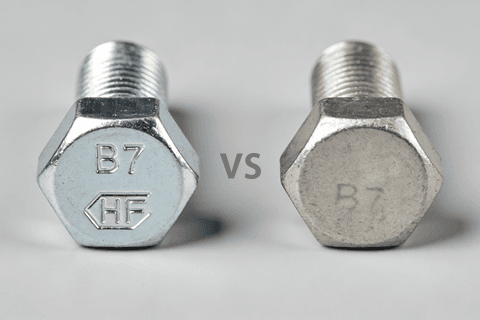
Fake ASTM A193 B7 Bolt Inspection: Spark Test & Hardness Guide
How to Identify Fake ASTM A193 B7 Bolts? A Manufacturer’s 3-Step Inspection Guide
![[PDF] Manufacturer Guide: How to Spot Counterfeit ASTM A193 B7 Bolts - High Fasteners](https://inwindcms.nextjsbase.com/assets/2026/01/gNbQFkcjh6JZtT8Sf1WSm-image.png)
A Manufacturer's Guide to Avoiding the "Fake B7" Trap
Author: Alex Lyon (Manager at High Fasteners)
Date: January 5, 2026
Read Time: 15 Minutes
Introduction: The $2 Bolt That Costs $2 Million
In the petrochemical and offshore industries, we often say: "The most expensive bolt is the one that fails."
Picture this: You are overseeing a pipeline project in Saudi Arabia or Texas. The pressure is high, the temperature is soaring. You saved 15% on your procurement budget by buying "ASTM A193 B7" stud bolts from a new, cheaper supplier.
Three months later, a flange leaks. Or worse, a stud snaps under pressure. The shutdown costs? Millions. The safety risk? Calculating.
As a manufacturer based in Handan (China's fastener hub) for over 20 years, I have seen the good, the bad, and the ugly. The ugly truth is that the market is flooded with "Fake B7" bolts. They look like B7, they are stamped B7, but metallurgically? They are nothing more than common construction steel.
Today, I'm going to teach you how to spot these counterfeits. You don't need a lab coat; you just need a sharp eye and a few simple tools.
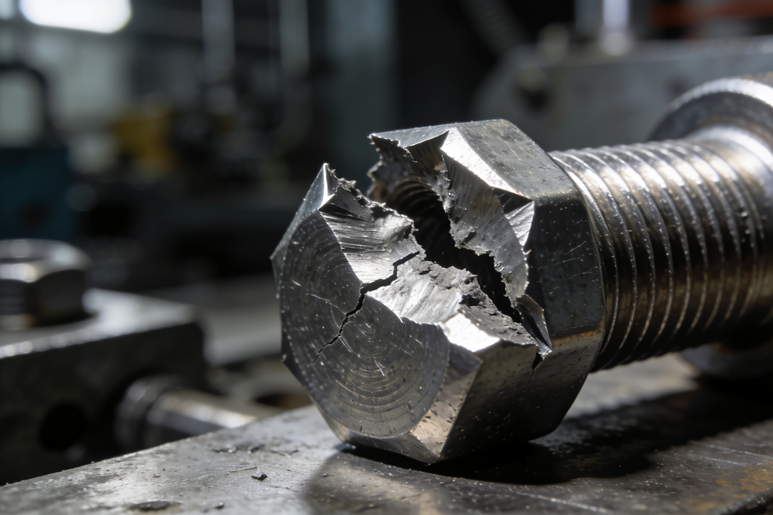
A catastrophic failure caused by sub-standard fasteners. Don't let this happen to your project.
Part 1: Why Do Factories Cheat? (The Economics of Fakes)
To catch a thief, you have to think like one. Why would a factory risk their reputation to sell you fake B7s?
The answer is simple: The Material Gap.
Real ASTM A193 Grade B7 requires AISI 4140 (or 42CrMo) Alloy Steel. This steel contains Chromium and Molybdenum. It's expensive, and it requires a sophisticated Quenching and Tempering (Q&T) heat treatment process to reach the required tensile strength (125 ksi) and hardness.
The "Fake" Recipe:
Unethical workshops substitute 4140 with 45# Carbon Steel (1045 Steel).
Cost difference: 45# steel is significantly cheaper than 4140 alloy.
Process difference: They skip the expensive heat treatment or do a poor job of it.
The Result: A bolt that looks shiny and strong but lacks the high-temperature strength and tensile capacity of real B7. It becomes brittle and snaps under load.
Now, let's get to the practical part. How do you, the buyer or engineer, tell the difference?
Part 2: The Visual Inspection (Look Closer)
You don't always need a spectrometer to spot a fake. Sometimes, the bolt tells you it's fake if you know where to look.
1. The Head Marking (Stamping)
According to ASTM standards, every B7 bolt must be stamped with:
• The Grade Symbol (B7).
• The Manufacturer's Identification Symbol (e.g., ours is HF).
The Warning Signs:
• Missing Logo: If a bolt only says "B7" but has no manufacturer code, do not buy it. It means no one is taking responsibility for that product.
• Faint/Blurry Stamping: Real manufacturers use high-pressure stamping machines during the forging process. The letters should be crisp and deep. Counterfeiters often stamp manually after production, leading to uneven, shallow, or crooked markings.
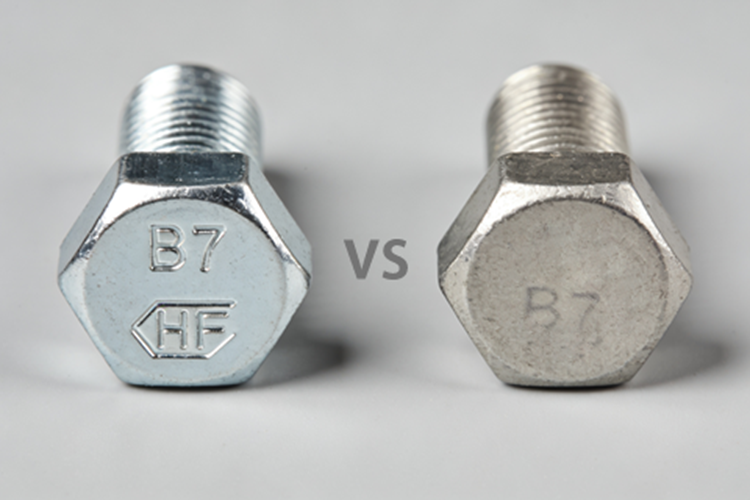
Left: Genuine High Fasteners B7 bolt with clear ID. Right: A generic, suspicious bolt with poor stamping.
Part 3: The "Spark Test" (The Old School Method)
This is my favorite trick. It's how the old engineers in our Handan factory check incoming raw materials. You can do this in your warehouse with a simple grinding wheel.
The Science:
Different steels emit different "sparks" when ground.
• Carbon Steel (The Fake): Produces a long, white/yellow stream with many bursting "stars" or "flowers" at the end. The carbon burns off explosively.
• Alloy Steel 4140/B7 (The Real Deal): Produces a darker, shorter, orange/red stream. Because it contains Molybdenum and Chromium, the sparks do not burst as much. The spark tips are spear-like, detached from the stream.
The Test:
Take a known "Real B7" and the "Suspect Bolt". Grind them side-by-side. If the suspect bolt lights up the room like a 4th of July firework (lots of white bursting stars), it's likely cheap Carbon Steel, not Alloy B7.
(Note: This is a qualitative test. For legal rejection, you need a lab test. But this is a great quick check.)
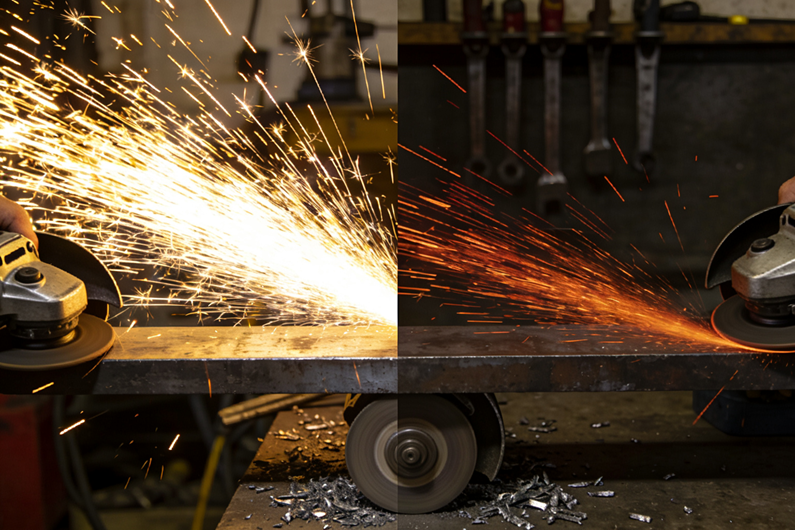
The Spark Test: Carbon steel (left) produces bursting white sparks. Alloy B7 steel (right) produces darker, non-bursting sparks.
Part 4: The Hardness Test (The Portable Truth)
If you are buying B7 bolts in bulk, you should invest in a Portable Hardness Tester. It costs a few hundred dollars but can save you millions.
ASTM A193 B7 Requirements:
• Hardness: Max 321 HBW (or roughly 35 HRC).
• Tensile Strength: Min 125 ksi (for sizes up to 2.5 inches).
The Scam:
Some factories use "Cold Drawn" 45# steel to fake the strength. Cold drawing makes the steel hard on the surface, but the core remains weak.
Or, they heat treat it poorly, making it too hard (brittle). A bolt that is too hard (>35 HRC) is susceptible to Hydrogen Embrittlement and can snap suddenly.
What We Do at High Fasteners:
We perform Core Hardness Testing, not just surface testing. We cut a sample bolt and check the hardness at the center (radius/2). A real B7 bolt must have uniform hardness throughout its cross-section.
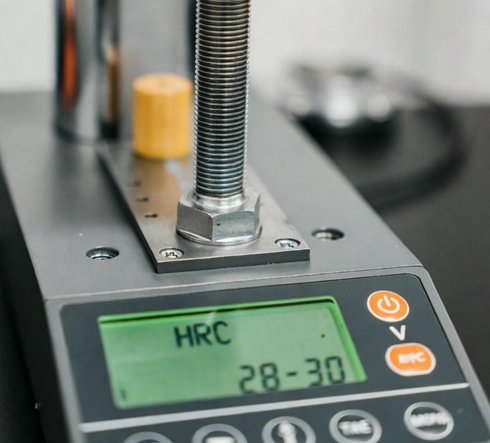
Routine hardness testing at High Fasteners QC lab. We ensure every batch falls within the ASTM A193 mandated range.
Part 5: The Thread Quality (Optical Sorting)
You might wonder: "What does thread quality have to do with fake material?"
Everything.
Factories that cheat on material usually cheat on machinery too. They use worn-out thread rolling dies to save money. This results in:
• Undersized threads (The nut feels loose).
• Rough thread surface (Prone to corrosion and galling).
• Incorrect pitch (Installation nightmare).
The High Fasteners Standard:
We don't rely on random sampling for thread quality. We use Automated Optical Sorting Machines.
Every single stud bolt passes through a laser sensor. It checks the Major Diameter, Minor Diameter, and Thread Pitch to an accuracy of 0.02mm.
If a bolt is 0.05mm out of spec? The machine kicks it into the "Reject" bin. You never see it.
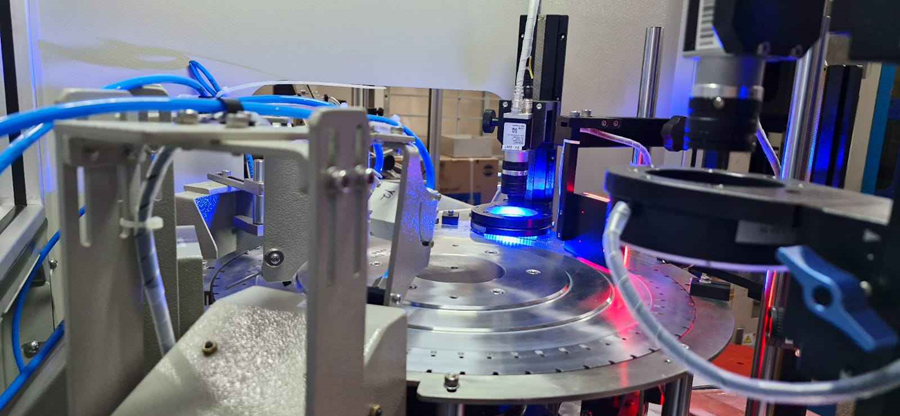
Our Optical Sorting technology guarantees 0-PPM defects. If the thread isn't perfect, it doesn't leave our factory.
Part 6: How to Verify the MTC (Mill Test Certificate)
The MTC is the "ID Card" of your bolts. But in the age of Photoshop, fake MTCs are common.
3 Checks to Spot a Fake MTC:
• Heat Number Traceability: Every MTC has a "Heat No." (e.g., H2025-88). This number must also be marked on the box label or the bolt itself (for larger sizes). If the numbers don't match, the certificate is worthless.
• Chemical Composition: Check the "Mo" (Molybdenum) content on the report. For B7, Mo must be 0.15 - 0.25%. If Mo is 0.00% or missing, it's not B7.
• The "Too Perfect" Data: If the tensile strength is exactly the minimum requirement (e.g., exactly 125.00 ksi) on every line, be suspicious. Real manufacturing data has slight variations.
At High Fasteners, we provide MTC type 3.1 with every shipment, traceable back to the raw material steel mill.
Conclusion: Don't Gamble with Safety
Sourcing from China offers incredible value, but only if you are buying the real thing. The price difference between a fake B7 and a real B7 might be only 5% to 10%. But the risk difference is 0% vs 100% failure.
When you receive a quote that is 20% lower than the market average, ask yourself: "Where did they cut the cost?" Did they remove the Molybdenum? Did they skip the tempering?
At High Fasteners, we don't cut corners.
We invite you to visit our factory in Handan, see our raw material yard, check our heat treatment furnaces, and watch our Optical Sorting machines in action.
Need Real B7 Bolts?
Whether you need standard Black Oxide, Zinc Plated, or our premium PTFE/Xylan Coated B7 studs, we deliver certified quality.
[Download Our ASTM A193 B7 Specification Sheet PDF]
(Click to view on Issuu)
Contact Us for a Quote:
Handan Hangfan Metal Products Co., Ltd.
(Brand: High Fasteners)
Website: www.highfasteners.com
Email: admin@changhua-electrical.com
Factory Add: Yongnian District, Handan City, Hebei, China.
相关资讯
您可能感兴趣的其他资讯
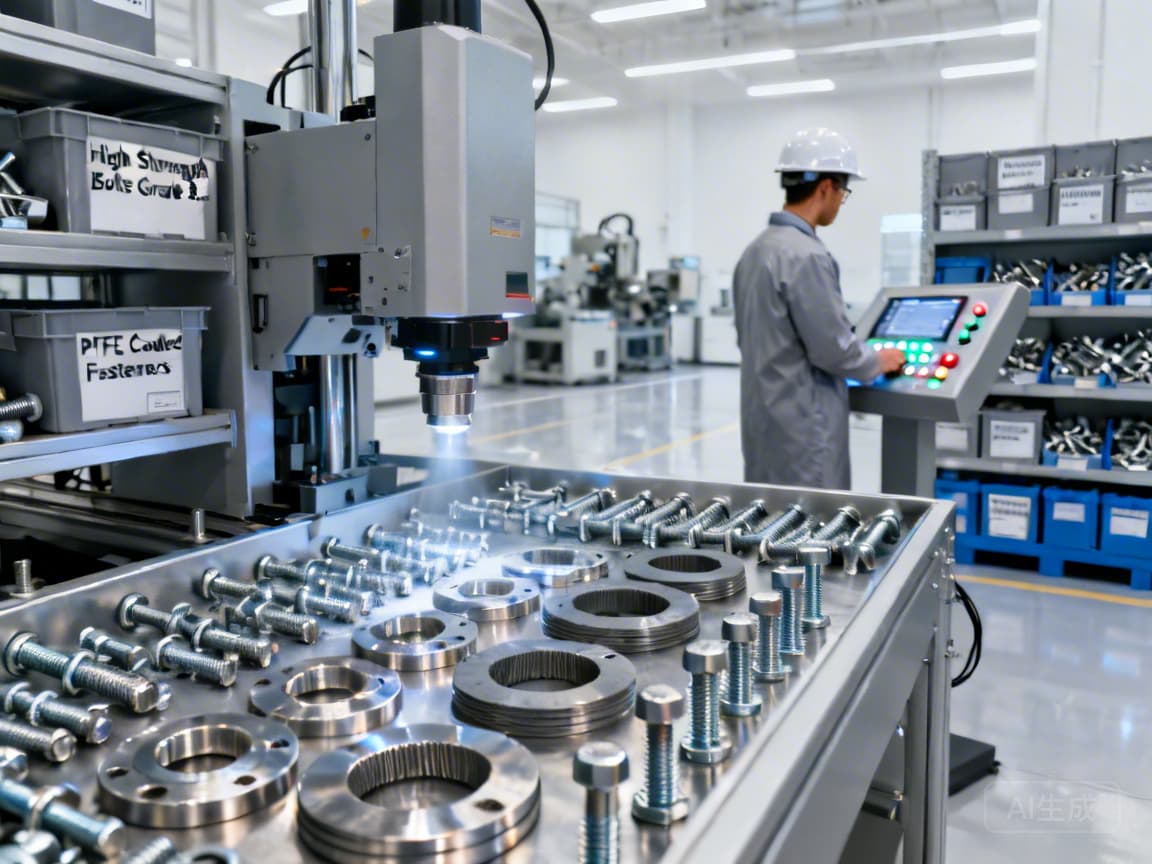
工厂直销工业紧固件和部件:解决2024年关键的制造和施工挑战
全球工业公司正在努力应对与紧固件相关的供应链中断、合规要求和腐蚀挑战。工厂直销High Fasteners提供可靠、经济高效的解决方案——OEM灵活性、光学分拣质量控制和工程产品——简化B2B制造和建筑合作伙伴的采购。
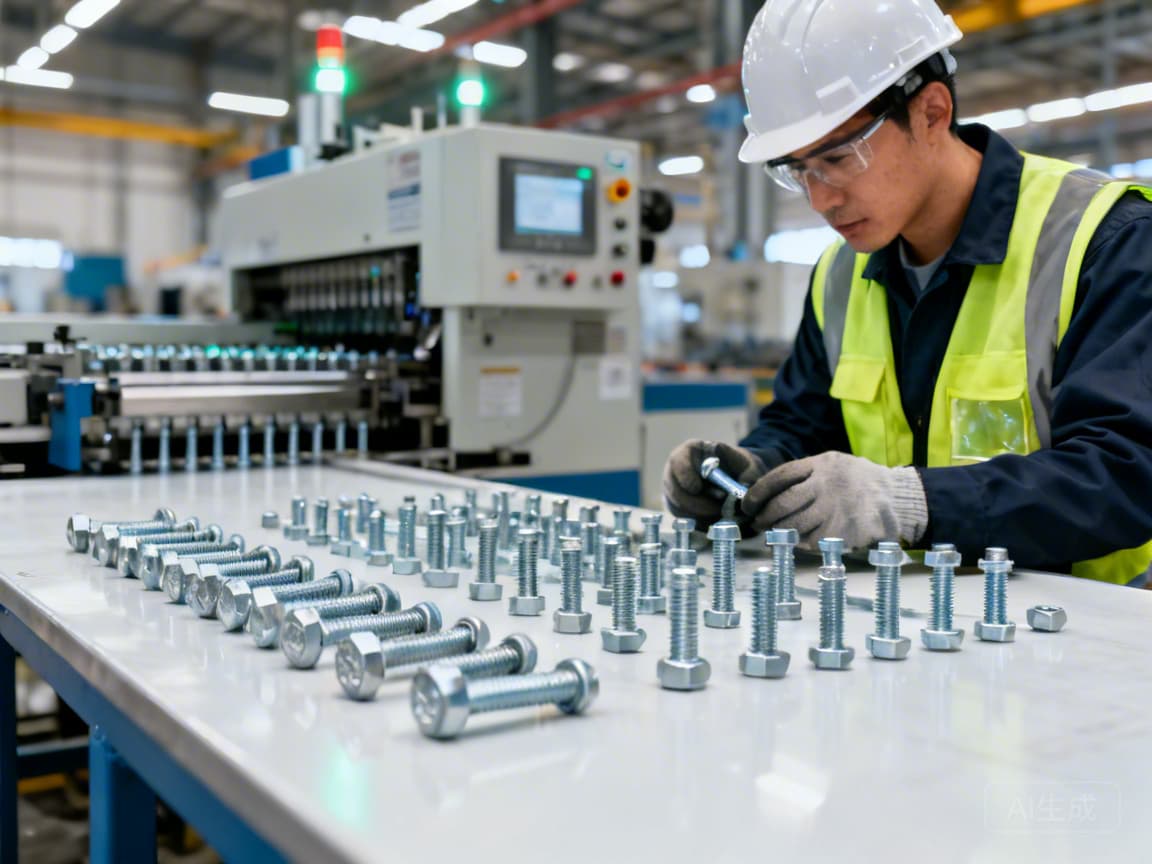
工厂直销工业紧固件:通过合规的高强度解决方案解决2025年的制造和施工痛点
工厂直营工业紧固件解决了2025年制造/施工的痛点——供应链延迟、合规性、性能。定制OEM、最小起订量灵活性、光学分选和HDG/PTFE涂层,提供可靠、合规的解决方案。
Want to know more?
Get in touch with us for more information about our services and products.